
Mandala of the Two Realms
Wisdom & Compassion
Wisdom & Compassion. Two mandalas. Two ways of meeting the same reality. The mandala is a bridge between chaos and order, inner and outer, duality and non-duality—a space where opposites can be seen, held, and brought together.
Shingon Buddhism
When Kūkai studied Esoteric Buddhism in China, he received teachings from two major lineages: one centred on the Womb Realm and the other on the Diamond Realm. He brought these teachings back to Japan, where they became fundamental to Shingon Buddhism.
The two mandalas came to be understood together as the Mandala of the Two Realms. But why two?


Two Realms, One Reality
The two mandalas are not two separate realities. In Shingon practice, they are understood as different but inseparable expressions of the same truth.
Yamasaki describes them together through relationships such as truth and wisdom, matter and mind, equality and discrimination. The Womb Realm shows the wholeness and interconnectedness of reality; the Diamond Realm shows the wisdom capable of recognising its many individual forms.
One reveals reality through compassion and wholeness. The other reveals it through wisdom and clear knowing. Together, they form a more complete picture.
One does not cancel the other.
Compassion allows us to hold what is here.
Wisdom allows us to see what is here.
Without compassion, clarity can become rigid.
Without clarity, compassion can lose direction.Wholeness comes through both.
The Diamond Realm
Wisdom · Clarity · Knowing

The Womb Realm
Compassion · Holding · Potential
From Mandala to Practice
These Mandalas are fascinating, but their meaning can often feel distant from everyday life. In Shingon practice, a mandala is not simply an image to look at, but something to contemplate, visualise, and enter through body, speech, and mind.
We want to bring these ideas into a more practical and accessible approach.
Through centre, repetition, geometry, colour, and natural materials, what appears outside can become a mirror for what is happening within.
Sometimes a pattern repeats for so long that we no longer recognise it as a pattern. Making gives it form.
Repetition → Pattern → Awareness → Choice
Using the Womb Realm and Diamond Realm as inspiration, the workshop creates space to explore compassion, wisdom, and our own inner experience through making—moving the mandala from something we study into something we practise.


Open againn October 2026
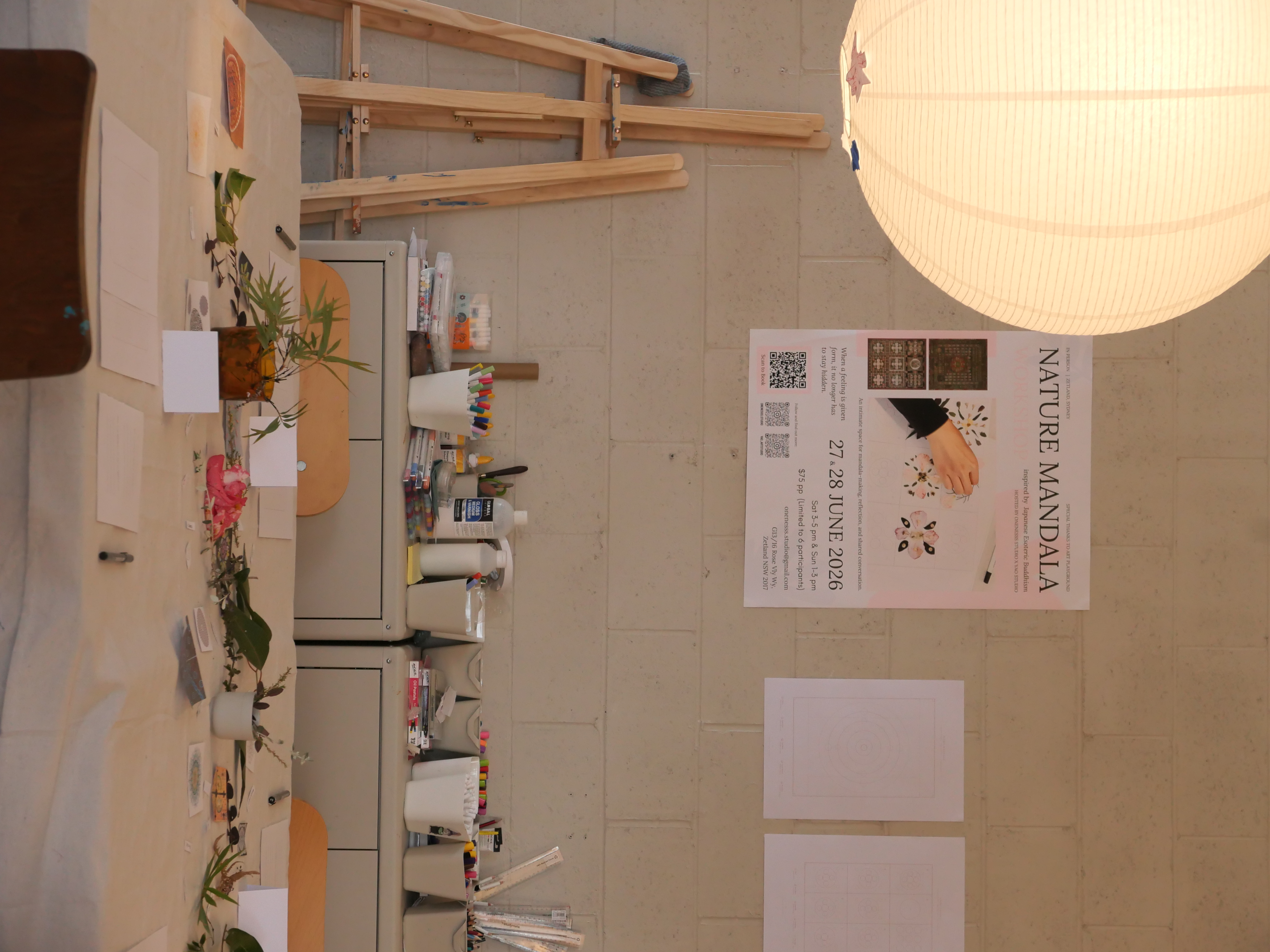
Nature Mandala
Workshop
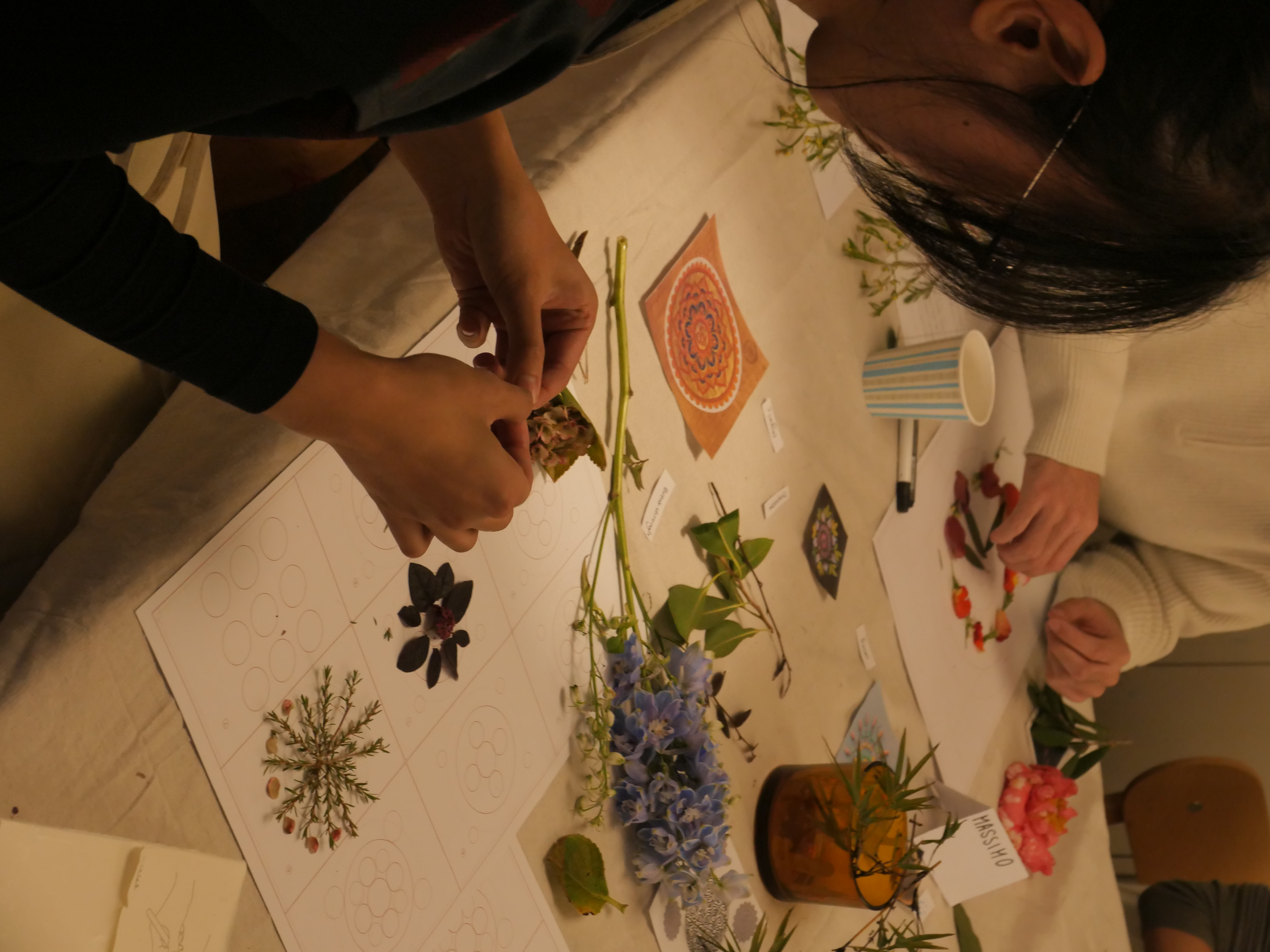
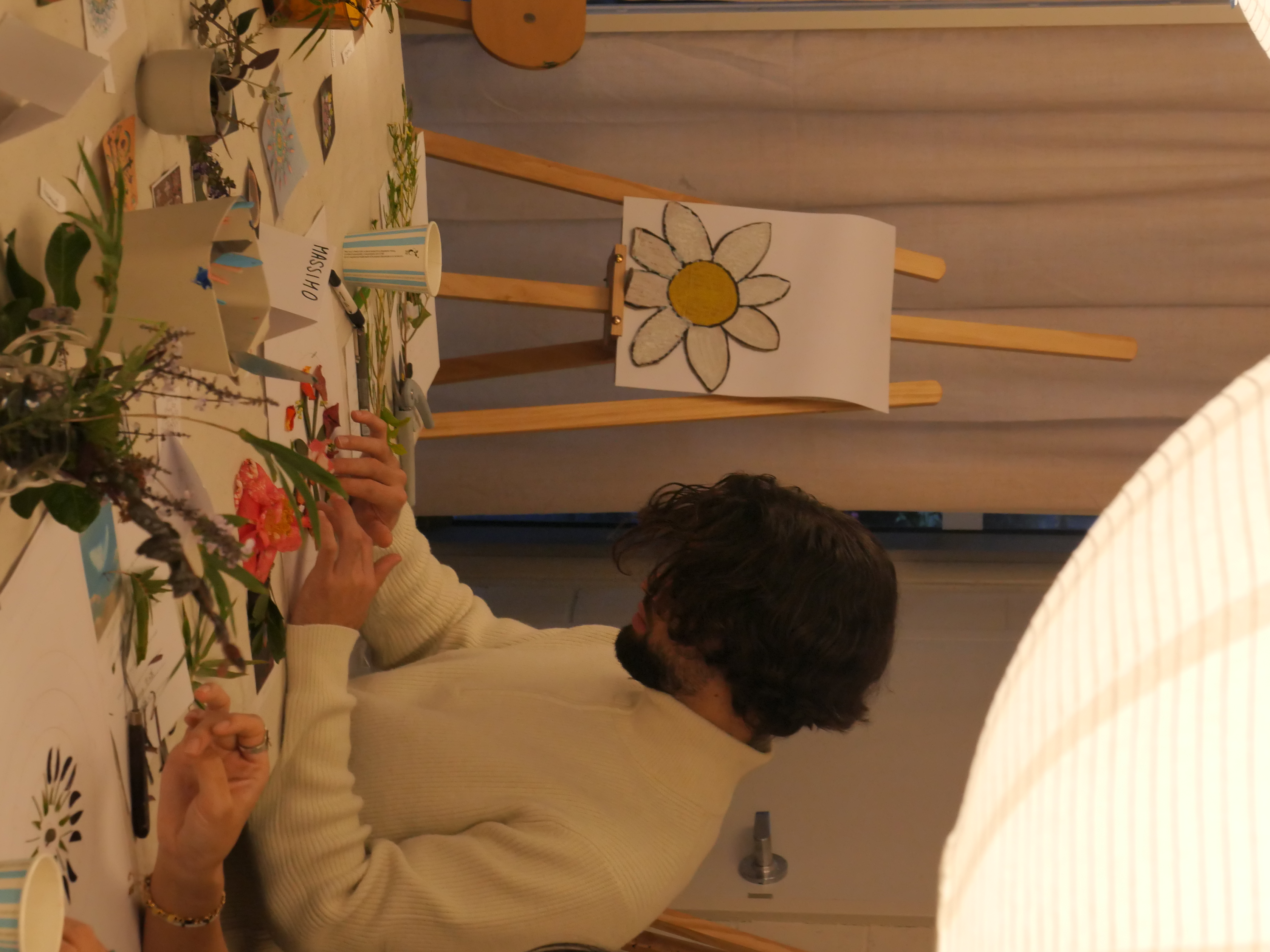
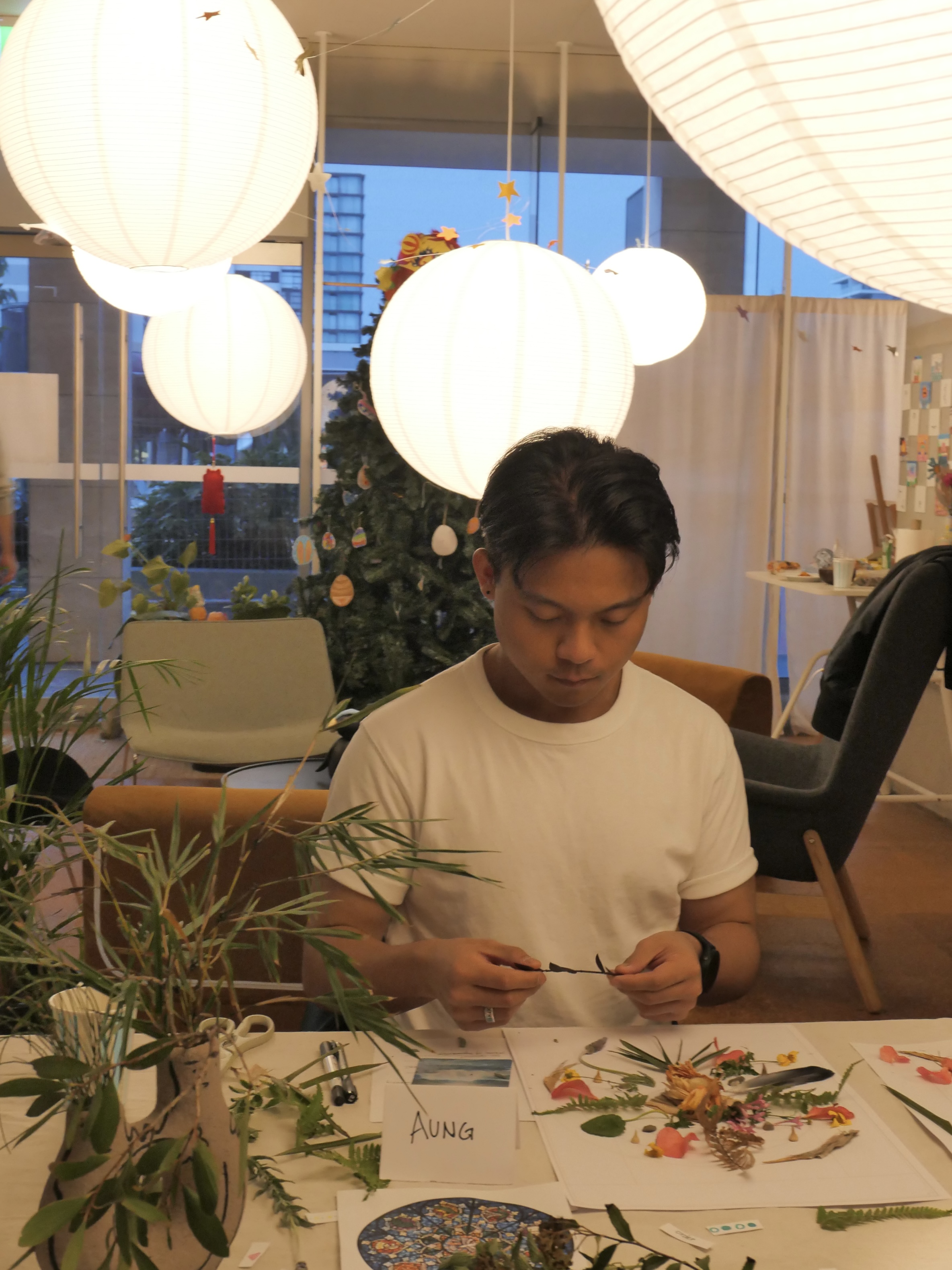
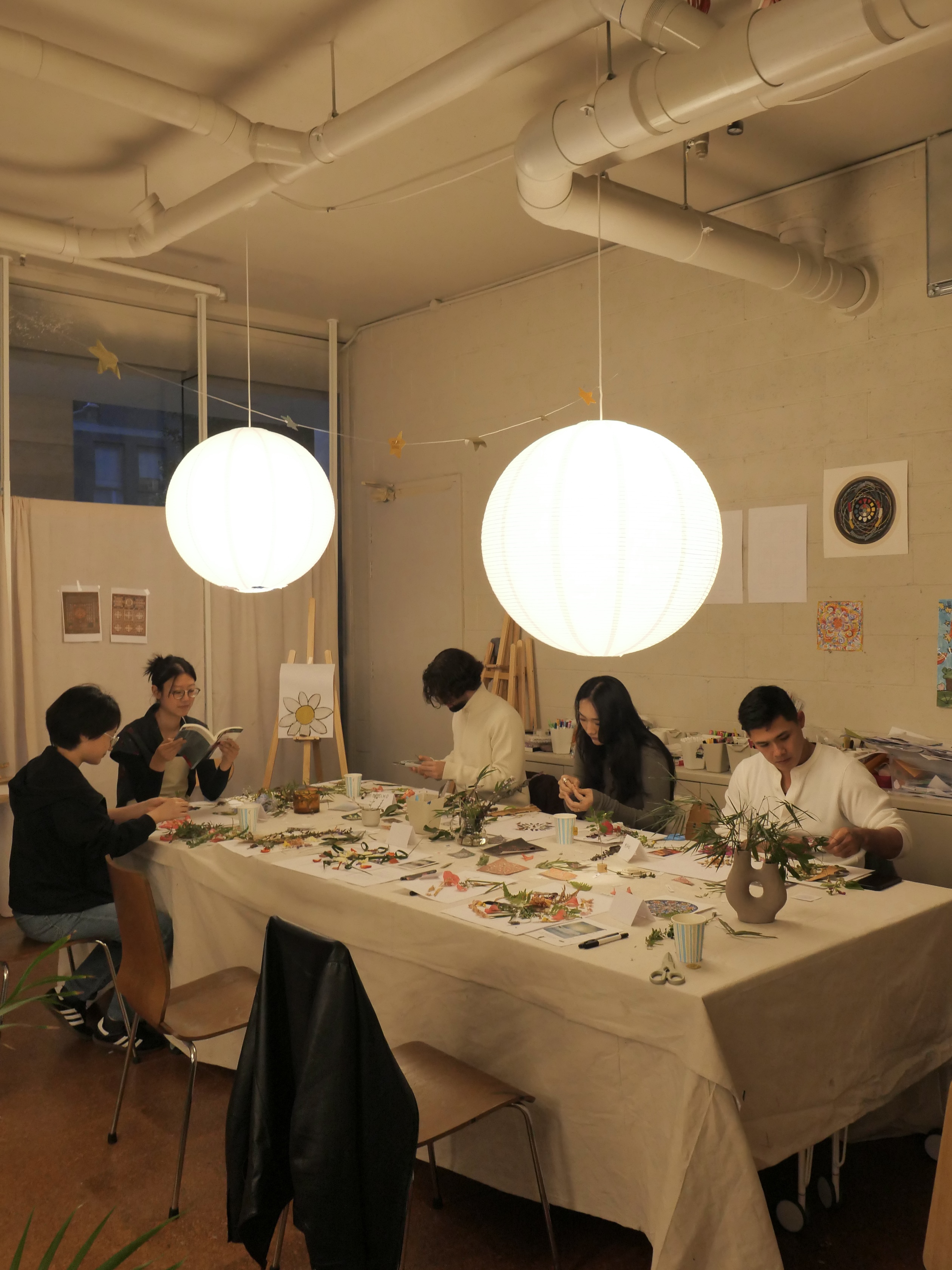
Join small, reflective workshops that weave together Mandala of the Two Realms and Reverse Meditation. Each session offers time for teaching, guided practice, and quiet making, with space to integrate what arises.
Intro to Mandala and the Two Realms
Reflection & Tea Break
Nature Mandala Making & Sharing
Reverse Meditation
The bridge between Mandala and Reverse Meditation
The mandala can be used as a visual meditative tool—a way of accepting the different polarities of life rather than going against them, and gently bringing ourselves back to the centre.
Through geometry, symmetry, and repetition, inner states can become visible. What we feel but cannot always explain can be externalised through image and symbol.'
Carl Jung saw the mandala as an expression of psychic wholeness, supporting the integration of different parts of the self, including shadow work. What we think can become so familiar that we no longer see it clearly; once it appears in front of us, we can begin to observe the pattern.
Language can only describe so much. The mandala allows us to experience first—to contemplate what appears, notice the mechanism behind it, and perhaps begin to reverse it.